
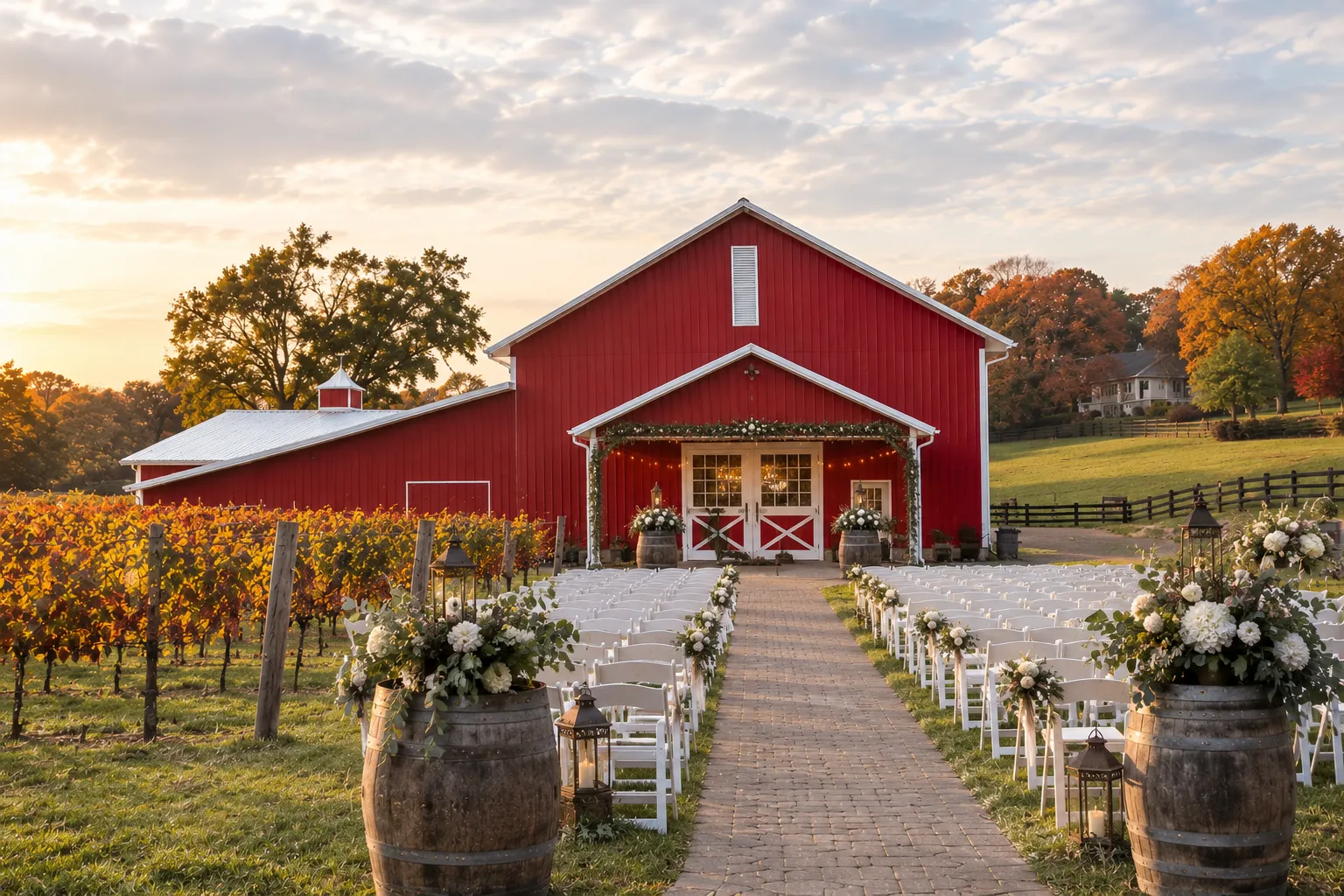
Robin Hill Farm and Vineyards occupies 15800 Croom Road, Brandywine, MD 20613 — a family farm continuously owned and operated for over 65 years, with the first vines planted in 2014 and the winery and tasting room opened in 2017 inside a renovated tobacco barn that connects Maryland's agricultural past directly to its winemaking present. Estate wines include Merlot, Cabernet Franc, Vidal Blanc, Chardonnel, and Chambourcin — all grown on the Brandywine property that has been recognized twice with the Soil Conservation Farm of the Year award. Three miles north on the same road, Two Lions Vineyards offers a complementary tasting experience, creating one of Maryland's most accessible two-winery wine-tour afternoons in Prince George's County.
- Address: 15800 Croom Road, Brandywine, MD 20613. Phone: (301) 643-5619.
- History: Family farm since 1955 · Vineyard since 2014 · Winery since 2017.
- Tasting room: Renovated tobacco barn. Seasonal hours — check the farm website before visiting.
- Wines: Merlot, Cabernet Franc, Vidal Blanc, Chardonnel, Chambourcin — all estate-grown.
- Awards: Soil Conservation Farm of the Year (twice).
- Nearby: Two Lions Vineyards — 3 miles north on Croom Road.
ownership begins
room opens
to Robin Hill
on Croom Road
Visitor Details
| Detail | Info |
|---|---|
| Address | 15800 Croom Road, Brandywine, MD 20613 |
| Phone | (301) 643-5619 |
| Farm founded | 1955 |
| Vineyard planted | 2014 |
| Winery opened | 2017 |
| Estate wines | Merlot, Cabernet Franc, Vidal Blanc, Chardonnel, Chambourcin |
| Awards | Soil Conservation Farm of the Year (twice) |
The Farm Story: Why the Timeline Matters
Robin Hill Farm has been family-owned since 1955 — six decades before the first vine was planted. The property operated as a traditional Maryland farm through the decades when Prince George's County's agricultural character was shaped by tobacco, soybeans, and the slow conversion of farmland to suburban development that has characterized the county's western and central areas. Robin Hill's persistence as a working farm into the 21st century, on land that it would have been economically advantageous to sell for development, reflects a family commitment to the property that the winery now makes accessible to visitors.
The transition to viticulture began in 2014 when the family planted their first vineyards. The winery opened three years later in 2017 — the same year the tobacco barn renovation was complete. This timeline matters because it means the farm's identity is not built around wine. The land came first, then the farm identity, then the conservation recognition, and then viticulture as the newest chapter in a property that was already 59 years old when the first vines went in. That depth of agricultural history is what differentiates Robin Hill from purpose-built destination wineries — the land has memory that the wine expresses, and the families who built the farm are the same families who planted the vines and poured the first bottles.
The Soil Conservation Farm of the Year recognition — received twice — reflects the environmental practices that predate the vineyard by decades. Sustainable land management is not a marketing position at Robin Hill; it's the practice of a family that has been winning conservation awards since before wine tourism was a commercial category in Prince George's County. The Experience Prince George's listing for Robin Hill Farm covers the property's position within the county's broader agricultural and tourism landscape.
The Tobacco Barn Tasting Room
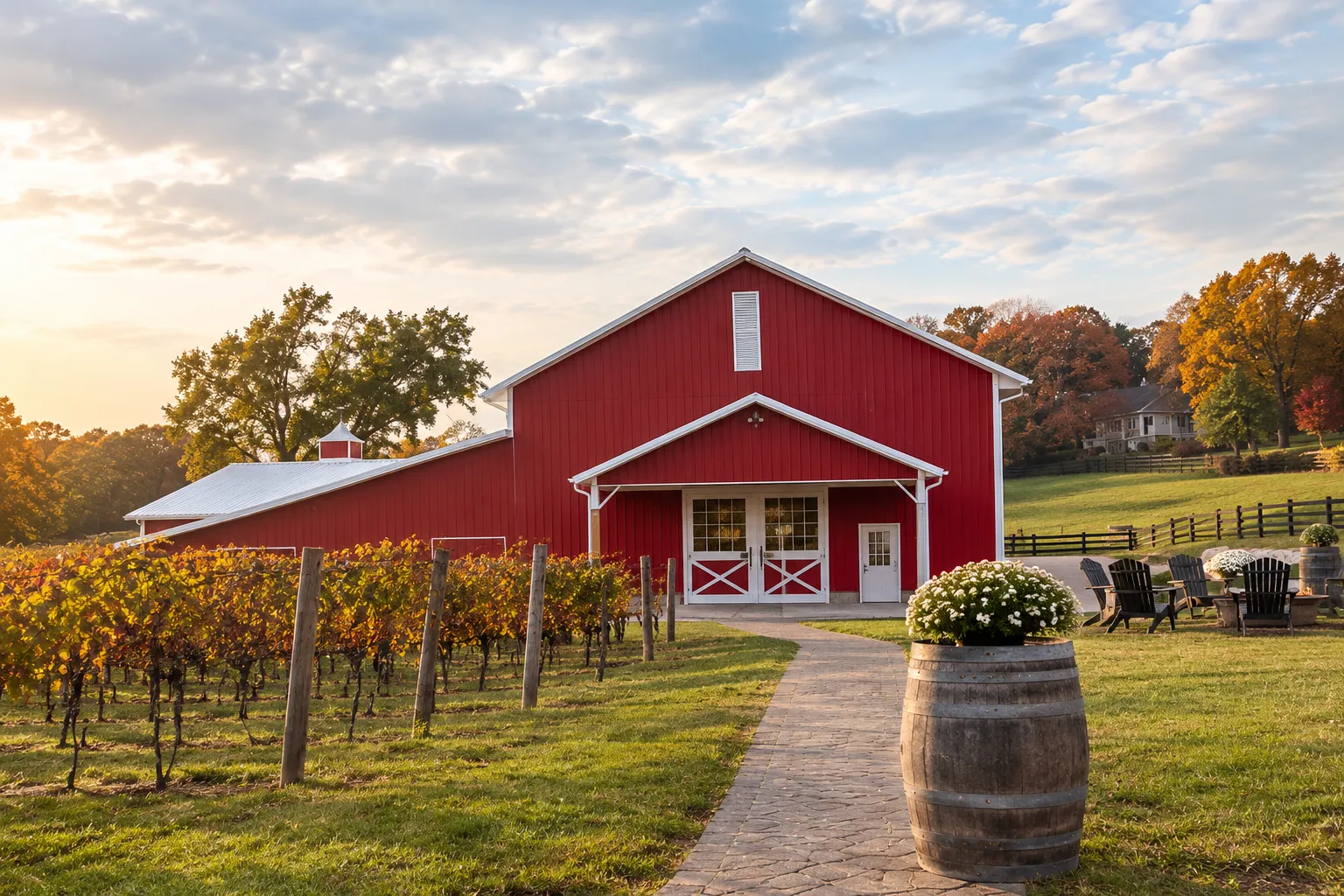
The tasting room occupies a renovated tobacco barn — one of the agricultural buildings that tell the story of Southern Maryland's farming heritage in physical form. Tobacco was the region's dominant agricultural commodity for centuries, from the colonial era through the 20th century, and the distinctive architecture of tobacco-curing barns — designed for ventilation, built from the most available local lumber, and sized to the specific requirements of hanging and drying tobacco leaves — appears across Prince George's, Charles, and Calvert Counties as the physical evidence of that agricultural history. Most tobacco barns have been demolished, repurposed into storage, or left to deteriorate as the tobacco acreage has declined. The conversion of a tobacco barn into a winery tasting room preserves the structure while giving it a new functional purpose that connects two different eras of Maryland agriculture in a single space.
Walking into the Robin Hill tasting room means walking into a building that predates the vineyard by decades — the weathered wood, the barn's proportions, and the light that comes through the structure's original ventilation openings all carry the history of the building's previous use. Tasting Cabernet Franc and Chardonnel in this environment produces a qualitatively different experience from tasting the same wines in a purpose-built modern tasting room, and it's the experience most directly linked to what makes Robin Hill worth visiting rather than simply ordering wine online. The Southern Maryland Agricultural Development Commission's farm guide documents Robin Hill alongside other Southern Maryland working farm destinations that offer agricultural tourism in the Brandywine and Croom Road corridor.
The Estate Wines
All Robin Hill wines are estate-grown on the Brandywine property. The variety selection reflects both Maryland's climate suitability and the specific choices that small estate wineries make when balancing commercial appeal with terroir expression.
Getting to Robin Hill Farm
Hours: Check the farm website or call (301) 643-5619 for current seasonal hours before visiting. The tasting room operates seasonally with special holiday openings.
The Croom Road Wine Corridor and Group Transportation
Robin Hill Farm and Two Lions Vineyards — three miles north at 12600 Croom Road, Upper Marlboro — are the anchors of the Croom Road wine corridor. Together they offer a complete Prince George's County wine-afternoon structure: the modern brand-identity experience at Two Lions (lion-named wines, adults-only format, founder's narrative) followed by or preceded by the multigenerational farm heritage experience at Robin Hill (tobacco barn, 65-year farm history, soil conservation recognition). The two properties provide complementary experiences rather than duplicative ones, which is what makes the Croom Road pairing more valuable than visiting either property alone.
A Maryland wine tour vehicle covers the three-mile hop between the two properties and the 25-to-50-minute drives from Baltimore, DC, or Annapolis at a fixed rate. The vehicle solves the fundamental winery-visit transportation problem — everyone wants to taste, nobody wants to be the designated driver — while keeping the per-person cost modest when split across a group of four to eight. For larger groups of eight to twelve combining the Croom Road wineries with a picnic, a meal at a nearby restaurant, or a broader Prince George's County outing, the vehicle provides flexible staging between the two tasting rooms and the return trip. An airport car service from BWI for visitors arriving specifically for a Maryland wine weekend connects the airport to the Croom Road corridor in approximately 25 minutes — making Robin Hill and Two Lions together one of the most accessible from-the-airport wine destinations in the mid-Atlantic market.
Maryland's Wine Industry and Robin Hill's Place in It
Maryland's wine industry has expanded significantly in the past two decades — from fewer than 20 licensed wineries in the early 2000s to over 100 by the mid-2020s, with production concentrated in Frederick County, the Chesapeake Wine Trail corridor of Howard and Anne Arundel Counties, the Western Maryland highlands, and the newer Prince George's County properties represented by Robin Hill and Two Lions. The state's climate — humid, with warm summers and cold winters — creates both challenges and opportunities for viticulture. The challenges (fungal disease pressure, late spring frosts, occasional summer drought stress) have pushed Maryland growers toward French-American hybrids like Chambourcin, Vidal Blanc, and Chardonnel that combine European wine quality with the disease resistance and cold hardiness the mid-Atlantic climate demands. The opportunities (warm growing seasons with good diurnal temperature variation, diverse soil types, and proximity to the largest wine-consuming market in the eastern United States) have made Maryland wines commercially viable at a scale that would have been implausible thirty years ago. Robin Hill's variety selection — Merlot and Cabernet Franc alongside the hybrids — reflects this balance: the farm grows what the land and climate support, which produces wines that express Prince George's County terroir rather than approximating a California or European model with mid-Atlantic fruit.
Croom Road Wine Tour: Robin Hill + Two Lions Vineyards
Bayside Limousines has served the Maryland, D.C., and Northern Virginia area for over 33 years. For a Croom Road wine afternoon — Robin Hill Farm and Two Lions Vineyards, tobacco barn and lion-named estate wines, three miles apart — we handle the driving so everyone tastes and nobody drives. Maryland wine country from Baltimore, DC, or Annapolis. We own every vehicle and employ every chauffeur directly.
Frequently Asked Questions
Farm history, wine varieties, and address confirmed from Experience Prince George's and SMADC listings. Confirm current tasting room hours at (301) 643-5619 before visiting.