
The 50th Annual Baltimore American Indian Center Pow-Wow takes place Saturday, November 21, 2026, from 11:00 AM to 7:00 PM at the Maryland State Fairgrounds Exhibition Hall, 2200 York Road, Lutherville-Timonium, MD 21093. The golden-anniversary edition celebrates five decades of Native American culture, tradition, and community through traditional dance competitions, drum groups, Native artisan vendors, authentic food, and educational programming. Organized by the Baltimore American Indian Center, it is one of the longest-running Native cultural events in the mid-Atlantic. This guide covers what happens at a pow-wow, how to visit respectfully, directions and free parking, and how families and groups can attend without the drive.
- Date and hours: Saturday, November 21, 2026, 11:00 AM – 7:00 PM.
- Venue: Exhibition Hall, Maryland State Fairgrounds, 2200 York Rd, Timonium, MD 21093.
- Organizer: Baltimore American Indian Center.
- Milestone: 50th anniversary.
- Parking: Free, on-site.
- From DC: ~50 miles, 55–70 minutes.
Pow-Wow
Saturday Nov 21
parking
Baltimore
Event Details
| Detail | Info |
|---|---|
| Event | 50th Annual Baltimore American Indian Center Pow-Wow |
| Date | Saturday, November 21, 2026 |
| Hours | 11:00 AM – 7:00 PM |
| Venue | Exhibition Hall, Maryland State Fairgrounds, 2200 York Rd, Timonium, MD 21093 |
| Organizer | Baltimore American Indian Center |
| Milestone | 50th Anniversary |
What Happens at a Pow-Wow
Grand Entry
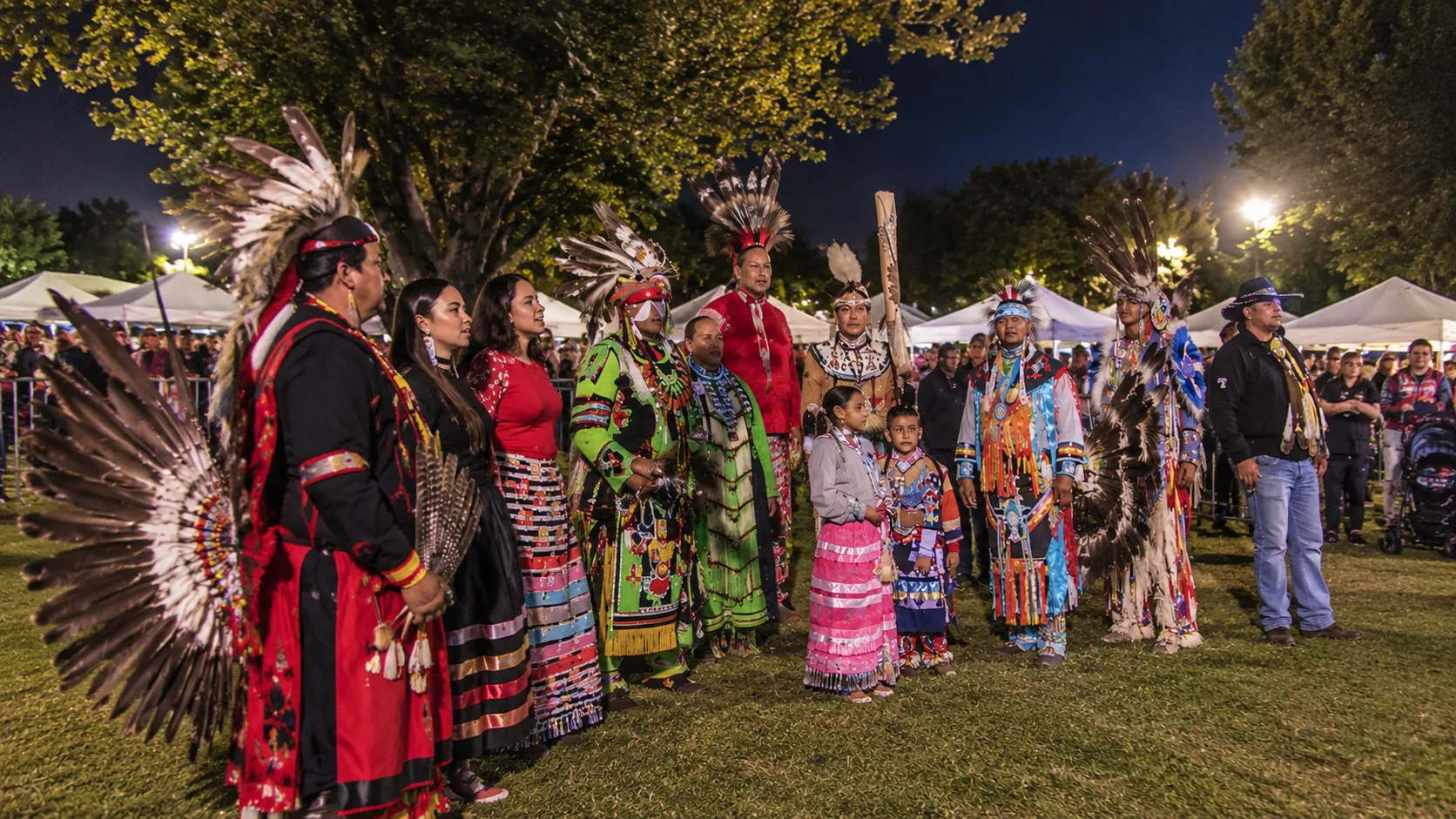
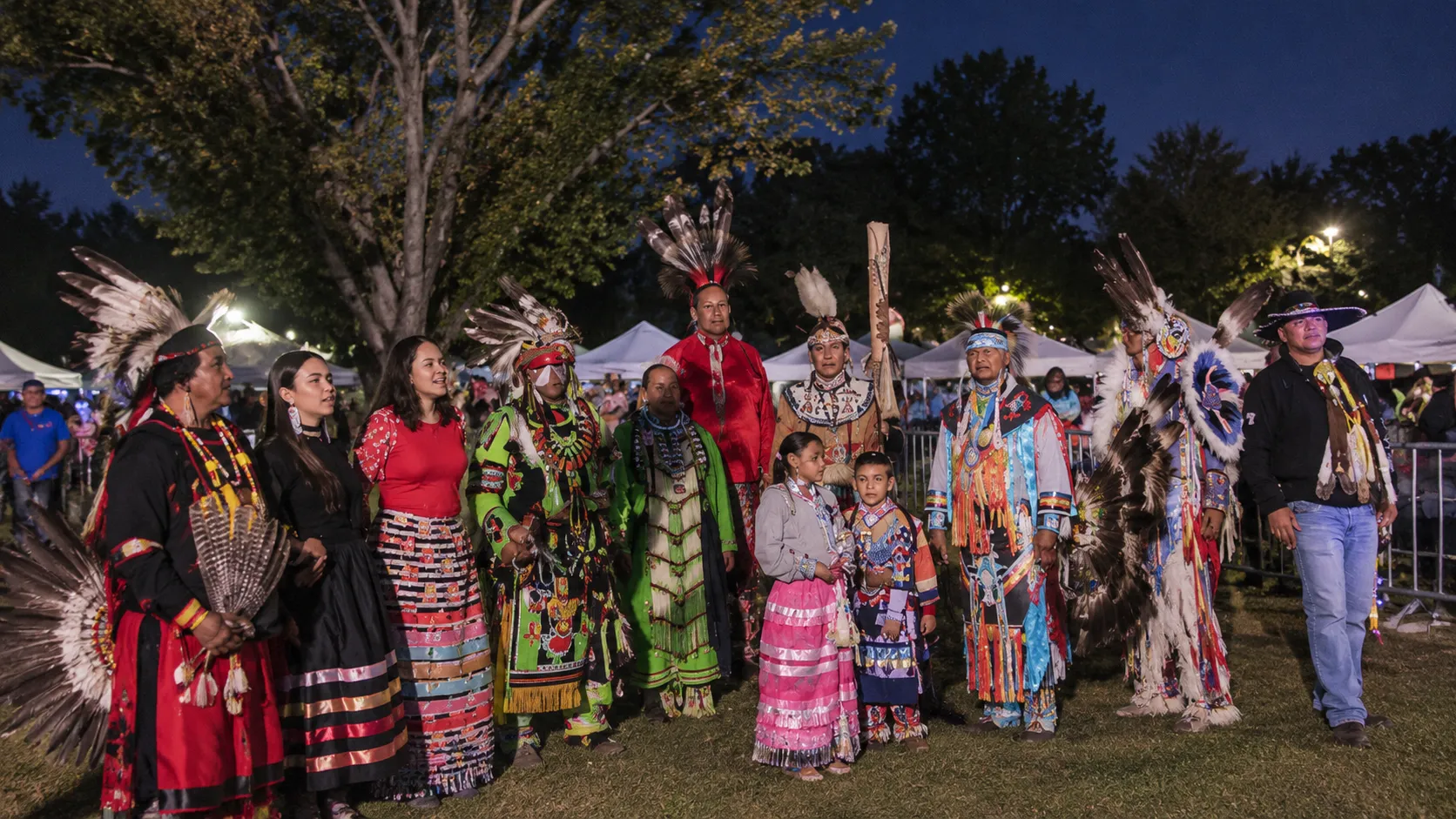
The pow-wow opens with Grand Entry, a formal procession of dancers in full regalia, led by flag bearers, veterans, and elders. The Grand Entry is the most visually spectacular moment of the day and sets the spiritual and cultural tone for everything that follows. Visitors are asked to stand respectfully as the procession enters, and to follow the emcee's guidance about photography and conduct during ceremonial moments.
Dance Competitions
Traditional, fancy, jingle, and grass dance competitions feature dancers of all ages, from tiny tots in their first regalia to elders who have danced for decades. Each dance style carries distinct meaning, distinct regalia, and a distinct movement vocabulary, and judges evaluate technique, authenticity, and spirit. Watching a competition is a way to see how tradition is carried forward across generations, and the pride visible in the arena, from children to elders, is part of what makes a pow-wow moving.
Drum Groups
The drum is the heartbeat of the pow-wow. Multiple drum groups perform throughout the day, providing the rhythmic foundation for every dance. The sound of a drum circle in an exhibition hall, the collective pulse reverberating off the walls, is a physical experience that recordings cannot capture. Drum groups also sing, and the songs carry stories, family histories, and prayers, so listening closely is part of the experience.
Native Vendors and Food
Artisan vendors sell handmade jewelry (turquoise, silver, and beadwork), pottery, leather goods, dreamcatchers, clothing, and Native art. The vendor area provides authentic Native-made goods rather than mass-produced imitations, and buying directly from artists supports Native makers and their communities. Food includes fry bread, Indian tacos, wild rice, venison, and other traditional and contemporary Native foods, with fry bread, the iconic pow-wow food, served fresh throughout the day.
Education
The pow-wow serves an educational mission: introducing the general public to Native American culture, history, and contemporary life. Emcees explain each dance style, describe elements of the regalia, and provide cultural context that transforms spectating into understanding. For many visitors, especially children, this is a first chance to see living Native culture rather than a historical exhibit. The Baltimore American Indian Center shares information on its programs year-round, and the pow-wow is one of its most visible events.
Visiting Respectfully
A pow-wow is a cultural and often spiritual gathering, and visitors are welcome as guests. A few simple courtesies help. Stand when asked during Grand Entry and other honor songs, and remove hats during those moments. Ask before photographing dancers, and never touch regalia. Dancers' regalia is personal and often sacred, so admire from a respectful distance. Listen to the emcee, who will explain when the arena is open to the public for intertribal dances and when to stay seated. Buy from Native vendors, and ask questions with curiosity rather than assumption. These habits make the day better for everyone.
Getting to Timonium Fairgrounds
Parking: On-site at the Maryland State Fairgrounds, and free. The event is held in the Exhibition Hall at 2200 York Road, Lutherville-Timonium, MD 21093. The lot capacity handles events of this scale comfortably, but arriving by late morning gives a closer space and a chance to see Grand Entry from the start. Check the Visit Baltimore events calendar for other November events in the area.
The 50th Anniversary Factor
Fifty years of continuous operation makes this pow-wow one of the most established Native cultural events between New York and the Carolinas. The anniversary edition will likely draw larger attendance than a standard year, with more dancers, more drum groups, more vendors, and more community members returning for the milestone. For the Baltimore American Indian Center, which has served the urban Native community for decades, the anniversary is a chance to honor the people who built the event and to welcome new generations. Many visitors treat a milestone year as a reason to attend for the first time, and families who have come for years often bring relatives from outside the area.
Why Families and Groups Choose a Vehicle
For families and groups from Annapolis, DC, or the Baltimore suburbs, a private group vehicle handles the round trip while the group experiences one of the most culturally significant events on the November calendar. An eight-hour day, from 11 AM to 7 PM, is a long outing, and a driver means the group can come and go on its own schedule, stay for the evening dances, and leave without rush-hour stress. A shuttle service suits community groups, school groups, and organizations that want to attend together from several pickup points.
Out-of-town relatives visiting for the milestone can use airport transportation from BWI, which reaches Timonium in about 30 minutes. For elders and families with young children, door-to-door service removes the difficulty of walking from a distant lot, and it provides a quiet, comfortable ride home after a long day of dance, music, and food.
Planning Your Pow-Wow Day
Arrive by late morning to see the Grand Entry and to browse the vendors before the afternoon crowd. Wear comfortable shoes and layers, since the Exhibition Hall can be warm inside and cool outside. Bring cash for vendors and food, since not all vendors take cards, and bring a bag for purchases. Plan to eat fry bread or an Indian taco early, since lines grow in the afternoon. If you are bringing children, explain what they will see, and encourage them to ask the emcee or a vendor about dances and regalia.
Take time to sit and watch, not just to browse. Pow-wows reward patience: the drum builds, the dancers move through their steps, and the meaning of each song unfolds slowly. By late afternoon, the arena often fills with dancers in all their regalia, and the sound and color are at their fullest. A driver waiting at a pre-agreed time lets the group stay until the end without worrying about the road.
Who Attends
The audience includes members of the Native community from Baltimore and beyond, families who attend every year, students and teachers interested in Native culture, and visitors from across the region. Many come as a group or a class, and some travel from out of state for the milestone. The mood is welcoming, and visitors who come with respect and curiosity are met in kind. For anyone who has never been to a pow-wow, the 50th anniversary is a meaningful time to start.
A Community Anniversary
A pow-wow is a community event first. The Baltimore American Indian Center has long served as a gathering place for Native families who live in the Baltimore area, many of whom are far from their home nations. Events like this one, held for 50 years, help keep language, dance, and traditions alive in an urban setting, and they offer younger generations a chance to learn from elders. The anniversary is an occasion for that community to reflect on how far the event has come, and for visitors to learn about the people who built it.
For visitors, the best way to honor the milestone is to attend with openness: arrive on time for Grand Entry, stay for the dances, buy from Native vendors, and ask questions with respect. The day is a chance to hear stories, see craftsmanship, and share a meal in a setting that has welcomed guests for half a century. Plan the ride in advance so the day stays about the people and the traditions, not the road.
Fry Bread and Other Foods to Try
Food is a central part of any pow-wow. Fry bread, a golden, puffy bread fried to order, is the most famous: eaten plain, with honey or powdered sugar, or as the base of an Indian taco with seasoned meat, beans, lettuce, and cheese. Wild rice dishes, soups, and venison show the diversity of Native foodways, and some vendors offer contemporary dishes alongside traditional ones. Lines can be long at the busiest times, so plan an early lunch or a late one, and bring cash. Share a few items with your group so you can taste more of the menu, and ask vendors about their recipes.
Family and Group Transportation to the Baltimore Pow-Wow
Bayside Limousines has served the Maryland, D.C., and Northern Virginia area for over 33 years. For the 50th Annual Baltimore Pow-Wow on November 21 — from Annapolis, DC, or the Baltimore suburbs — we take your family or group to Timonium and bring everyone home after the last dance. Door-to-door service for elders and children. We own every vehicle and employ every chauffeur directly.
Frequently Asked Questions
Event date, hours, and venue confirmed from the Baltimore American Indian Center and Visit Baltimore listings. Confirm current admission details and the daily schedule before attending.