
Boordy Vineyards at 12820 Long Green Pike, Hydes, MD 21082 is Maryland's first winery — founded in 1945 by Philip Wagner, the Baltimore Sun editorial page editor whose experiments with French-American hybrid grapes in the 1930s single-handedly transformed American winemaking and made serious wine production possible east of the Rockies. The winery operates from a restored 18th-century fieldstone barn in the Long Green Valley of Baltimore County, about 20 miles north of downtown Baltimore. Boordy is not just Maryland's oldest winery; it is the origin point for the entire mid-Atlantic wine industry — and the barn, the barrel cellar, the vineyard tours, and the estate wines together make it the most historically significant winery visit available within an hour of Baltimore or DC.
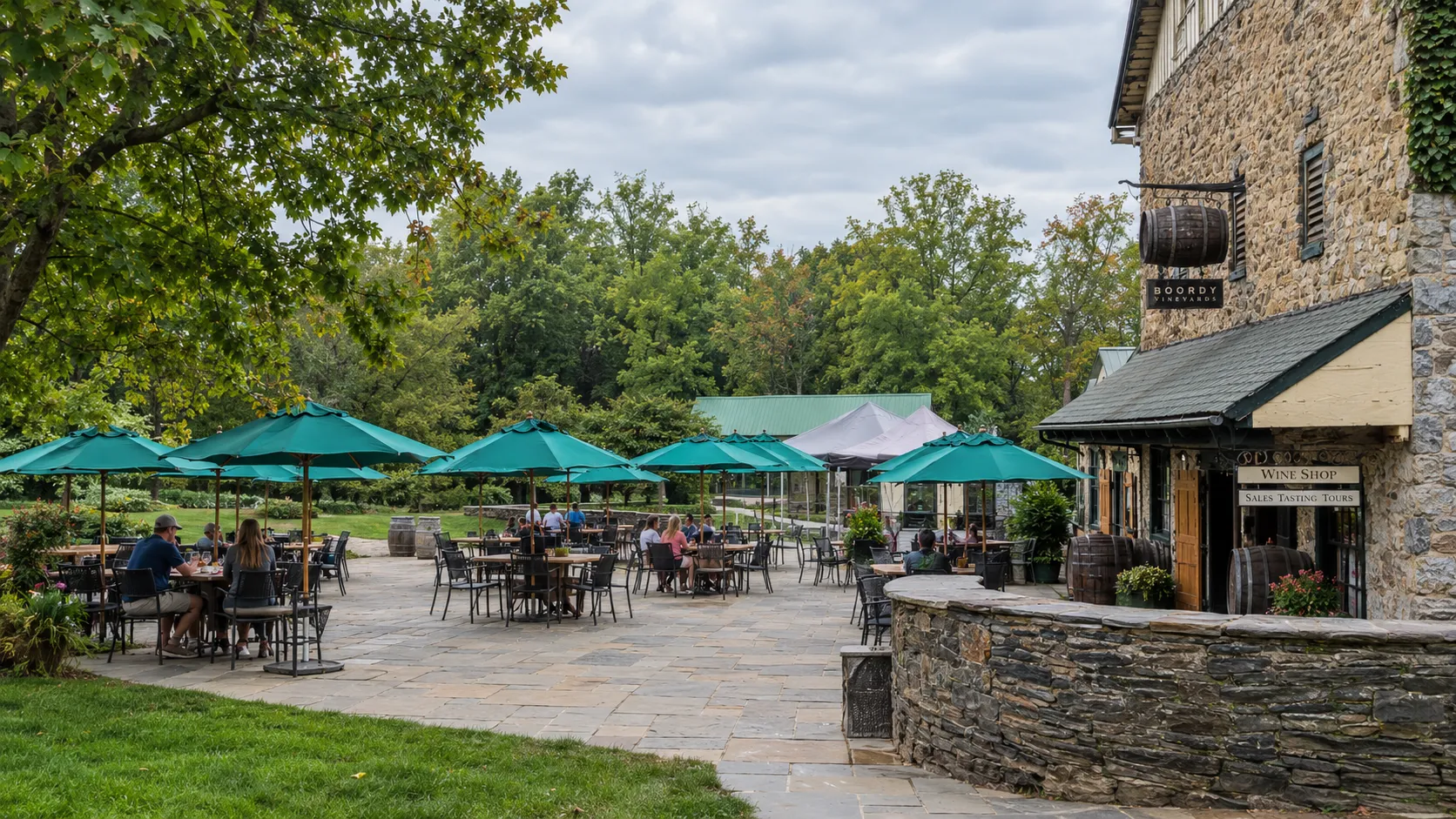
- Address: 12820 Long Green Pike, Hydes, MD 21082 (Baltimore County).
- Founded: 1945 by Philip Wagner — Maryland's first and historically most significant winery.
- Tasting room: A restored 18th-century fieldstone barn.
- Tours: Vineyard tours and barrel cellar tours available.
- From Baltimore: ~20 miles, 30–40 minutes through Baltimore County countryside.
- The drive matters: The route from Towson or Baltimore passes through some of the county's most scenic countryside.
founded
to Boordy
DC to Boordy
tasting room
Visitor Details
| Detail | Info |
|---|---|
| Address | 12820 Long Green Pike, Hydes, MD 21082 |
| Founded | 1945 by Philip Wagner |
| Tasting room | Restored 18th-century fieldstone barn |
| Tours | Vineyard tours and barrel cellar tours |
| Wines | Landmark, South Mountain, Icons series — reds, whites, rosé, sparkling, dessert |
Philip Wagner and the Revolution He Started
Philip Wagner was the editorial-page editor of The Baltimore Sun — a journalist, not a trained viticulturist — who began experimenting with French-American hybrid grapes in his Riderwood backyard in the 1930s. The problem he was trying to solve was fundamental: the European wine grape varieties (Vitis vinifera) that produce the world's great wines — Chardonnay, Cabernet Sauvignon, Pinot Noir — cannot survive the humid summers, cold winters, and fungal disease pressure of the eastern United States. American native grape varieties (Vitis labrusca) can survive, but they produce wines with the distinctive "foxy" flavor that American consumers found unappealing and European wine drinkers considered unserious. Wagner's insight was that French-American hybrids — varieties bred in 19th-century France to combine European wine quality with American rootstock hardiness — offered the solution: disease-resistant, cold-tolerant, and capable of producing wines with genuine character.
Wagner imported hybrid cuttings from France — Baco Noir, Seyval Blanc, Vidal, Chambourcin, and others — and propagated them in Maryland. His 1933 book American Wines and How to Make Them, followed by The Wine Grower's Guide, became the foundational texts for Eastern American viticulture. He began selling cuttings to home winemakers and eventually to commercial producers across the mid-Atlantic and New England. The Boordy Vineyards official website preserves and presents this history alongside current tasting room hours, wine releases, and event programming. In 1945, Wagner formalized the operation as Boordy Vineyards — named after his farm — and Maryland had its first commercial winery. Without Wagner's work, the Maryland wine trail, the Virginia wine industry, and the broader Eastern American winemaking revival that has produced hundreds of serious wineries from New England to Georgia simply would not exist in their current form.
The Deford Family Era and the Long Green Valley
In 1980, Rob Deford and his family purchased Boordy and moved it to the current Long Green Valley location — a historic farm in Baltimore County with the fieldstone barn that now houses the tasting room and production facility. The Defords expanded the vineyard operations, upgraded production infrastructure, and built Boordy into Maryland's flagship winery while preserving Wagner's legacy of hybrid-grape excellence and Eastern-viticulture advocacy. The Long Green Valley location — rolling terrain, diverse soils, and the specific microclimate of a valley between forested ridges — provides growing conditions that the Deford family has spent four decades understanding and optimizing. Today, Boordy farms vineyard sites across Maryland and sources from partner vineyard growers, producing wines from both the hybrid varieties that Wagner pioneered and the vinifera varieties that subsequent decades of Maryland viticulture have proven are viable in the mid-Atlantic climate with the right sites and management.
The Maryland Wine profile of Boordy Vineyards covers the current wine portfolio, seasonal tasting room programming, and Boordy's position within the state's wine industry — including the Chesapeake Wine Trail that connects Boordy to other Baltimore and Harford County wineries along a mapped touring route through the countryside.
What Makes Boordy Different: The Barn, the Cellar, the Tours
The 18th-Century Fieldstone Barn
The tasting room and production facility occupy an 18th-century fieldstone barn — thick stone walls, exposed timber beams, and a physical presence that connects every bottle poured inside to the agricultural history of Baltimore County's Long Green Valley. The barn predates the winery by nearly two centuries; the fieldstone construction reflects the German and English farming families who settled this part of Maryland in the colonial and federal periods, building permanent agricultural structures to last as long as they have. Walking into the Boordy tasting room means walking into a building that has housed harvests, livestock, and agricultural labor for longer than the United States has existed. Purpose-built modern tasting rooms are designed to convey atmosphere; Boordy's barn simply has it.
The Barrel Cellar
Boordy's barrel-aging program uses the barn's lower level as a natural cellar — the fieldstone walls and earth-contact construction providing natural temperature and humidity regulation that modern climate control tries to replicate but cannot precisely duplicate. Guided tours include the barrel cellar, where visitors see the aging process in the physical environment where it actually occurs rather than in a modern temperature-controlled warehouse. The cellar visit makes the winemaking process concrete in a way that explanations and videos don't.
Vineyard Tours and the Wines
Guided vineyard tours walk visitors through the rows — explaining Maryland terroir, vine management across the state's growing regions, the specific varieties that thrive in the Long Green Valley's microclimate, and the seasonal arc of viticulture from bud break through harvest. The Landmark Series represents the estate's premium wines; the South Mountain Series reflects the Washington County vineyard site; the Icons Series provides accessible entry points to the Boordy portfolio. Sparkling, rosé, and dessert wines round out the full range.
Getting to Boordy and the Wine-Tour Vehicle
Boordy is the natural anchor for a Baltimore County wine-tour afternoon. Combined with nearby wineries in the Long Green Valley and Harford County, a day of tasting creates the designated-driver question that every wine visit raises. A Maryland wine tour vehicle from Bayside handles the countryside driving while the group focuses on the wines. For groups of four to eight spending a Saturday at Boordy and the surrounding Long Green Valley wineries, the vehicle cost split per person buys a stress-free afternoon in wine country with no navigation through winding rural roads in the dark. For out-of-town wine enthusiasts arriving via BWI specifically for a Baltimore County wine day, an airport car service from BWI to the Long Green Valley covers the approximately 30-minute drive without rental-car navigation of unfamiliar rural roads.
Boordy and the Maryland Wine Trail
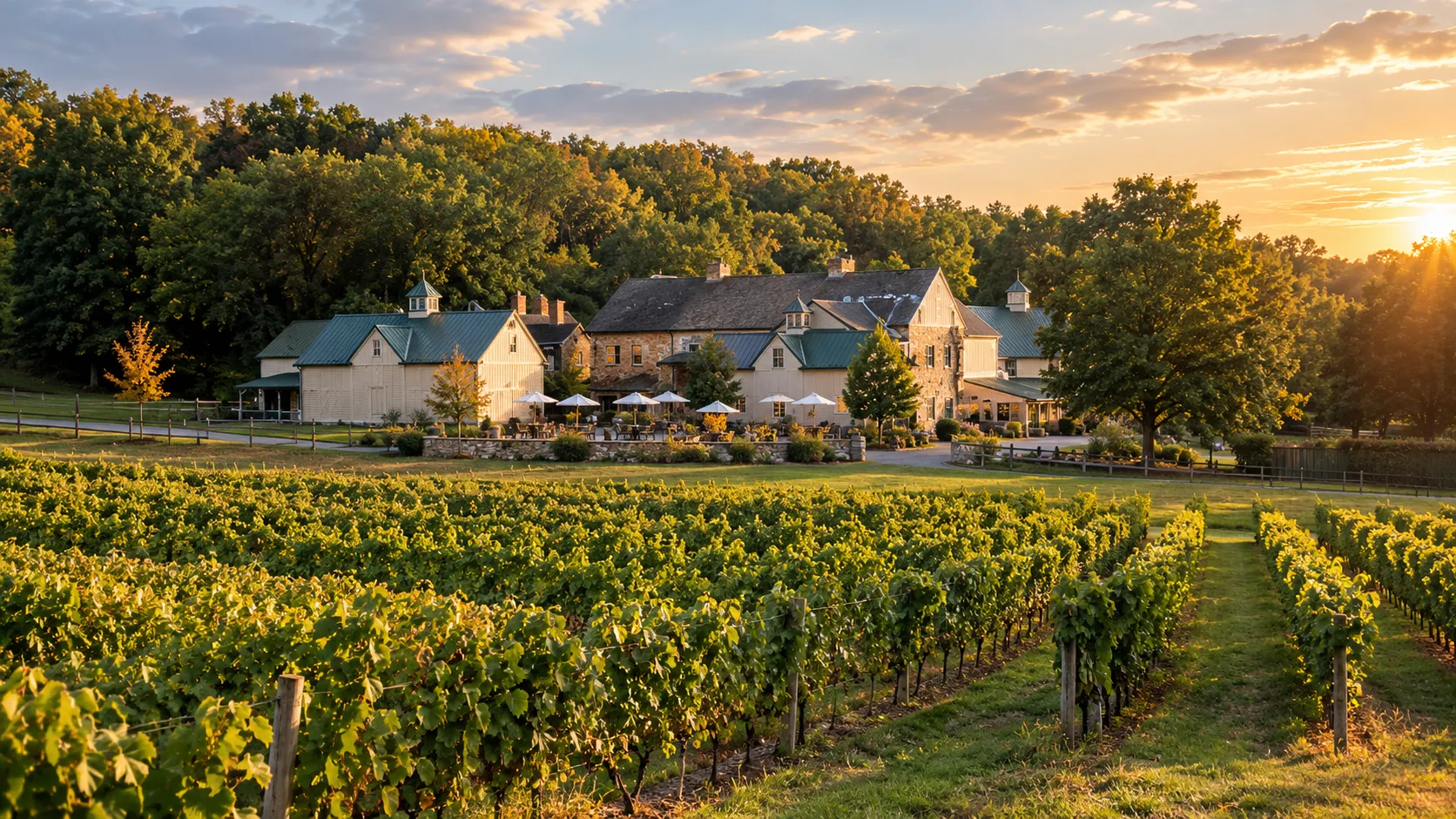
Boordy Vineyards is the northern anchor of the Chesapeake Wine Trail — the mapped touring route that connects Baltimore County and Harford County wineries through the countryside between Baltimore's northern suburbs and the Susquehanna River. The trail was developed in part because Boordy's Long Green Valley location established that the terrain north and east of Baltimore supports viticulture at a quality level worth promoting, and the subsequent generation of Harford County and Cecil County wineries clustered around the existing draw of Maryland's oldest and most historically significant producer. For visitors making a day or weekend of Baltimore County wine country, Boordy is the natural first stop — the historical weight of the Philip Wagner origin story and the physical character of the 18th-century barn provide the contextual foundation that makes the subsequent stops along the trail feel like chapters in a continuous narrative rather than disconnected tasting rooms. Boordy's role as anchor rather than appendage means that planning a Baltimore County wine tour typically starts with Boordy and works outward from there, and a wine-tour vehicle that can manage the winding rural roads of the Long Green Valley and its surrounding countryside is the practical instrument for that kind of exploratory day.
Baltimore County Wine Tour: Boordy Vineyards & Long Green Valley
Bayside Limousines has served the Maryland, D.C., and Northern Virginia area for over 33 years. For a Boordy Vineyards wine afternoon — Maryland's first winery, fieldstone barn, barrel cellar, and the Long Green Valley countryside — we handle the driving from Baltimore, Annapolis, or DC so everyone tastes and nobody navigates Long Green Pike in the dark. Fixed rate. We own every vehicle and employ every chauffeur directly.
Frequently Asked Questions
Winery details confirmed from Boordy Vineyards official site and Maryland Wine listings. Confirm current tasting room hours and tour availability at boordy.com before visiting.