
Amtrak is pausing train service through a key section of track just south of Washington Union Station for nine days, from after service ends Friday, October 16, 2026, through the morning of Monday, October 26. This isn't a full Amtrak shutdown — trains heading north from DC to Baltimore, Philadelphia, New York, and Boston run completely normally. The disruption is specifically for anyone traveling between DC and Virginia or points further south, and it's a real, confirmed, dated event worth planning around if that's your route this October.
- When: After service Friday, Oct 16, 2026 through Monday morning, Oct 26 — nine days.
- Where: A-Interlocking, in the First Street Tunnel just south of Union Station.
- North of DC is fine: Acela and Northeast Regional to Baltimore, Philly, NY, and Boston run normally.
- South of DC is affected: Some trains continue with a bus connection; others run partial routes.
- Alternative: A private car or Sprinter van covers DC↔Virginia directly, with no bus-bridge transfer.
2026
crew work
restriction
runs normally

What Is Amtrak's "Pause for Progress"?
"Pause for Progress" is Amtrak's name for a critical infrastructure upgrade at A-Interlocking, a track and control point inside the First Street Tunnel, just south of Union Station. A-Interlocking routes every Amtrak and Virginia Railway Express (VRE) train moving between Union Station and Virginia — and its switches and crossovers are, in Amtrak's own words, beyond their service life, currently forcing a 10-mph speed restriction on everything passing through.
During the nine-day closure, crews will work around the clock to replace two aging double-slip switches and a rail crossing (a "diamond"), install new electric switch machines, replace the track ballast, and fix drainage issues in the tunnel. Amtrak's deputy chief of production construction, Greg Michalski, put the schedule plainly: crews will work 24 hours for the nine days until the project's done. Doing it as one continuous closure — rather than spreading it across nights or weekends over months — is more efficient given how tight the tunnel's workspace actually is.
Which Trains Are Affected?
This is where the detail matters, because "Amtrak shutdown" headlines flatten a more specific picture. Here's the honest breakdown:
Not affected — running normally
Northeast Regional and Acela service north of Washington, to Baltimore, Philadelphia, New York, and Boston. If your trip doesn't involve traveling south of DC, this outage doesn't touch you at all.
Affected, but not simply cancelled
The Carolinian (New York–Charlotte) keeps operating, using a coordinated bus connection between Alexandria and Union Station — you ride the train partway, transfer to a bus, and continue, rather than losing the trip. Amtrak Virginia runs limited trains between Norfolk and Alexandria and between Roanoke and Alexandria, with buses linking Alexandria and Washington, plus express buses connecting DC with Richmond, Charlottesville, Lynchburg, Roanoke, Norfolk, Newport News, Williamsburg, and Virginia Beach. One Northeast Regional round trip on the Norfolk and Roanoke routes was also added back after Amtrak's initial planning had suggested no southern service at all.
More significantly disrupted — partial routes only
The Cardinal will run only between Chicago and Indianapolis; the Floridian splits into two disconnected segments (Chicago–Pittsburgh and Jacksonville–Miami); the Crescent runs only Atlanta–New Orleans; and the Silver Meteor and Palmetto also operate on shortened portions of their usual routes during the outage.
VRE commuter rail
VRE will run a modified schedule specifically to keep some daily DC-area rail access available. The exact modified timetable wasn't published in detail at the time of writing, so check VRE's own site closer to the date for the specific schedule.
What Amtrak Is Doing About It
Amtrak's core mitigation is the Alexandria transfer point: trains that would normally continue into Union Station instead terminate in Alexandria, where riders connect to Metrorail or a dedicated bus bridge to complete the trip into DC. Amtrak has said it will offer rebooking options and alternative travel support through Amtrak.com and its customer service channels throughout the outage.
Worth knowing for context: this isn't an isolated event. It's happening alongside longer-term Long Bridge reconstruction work that has already reduced morning Richmond-to-Union-Station train frequency and continues through December 2030 — this specific nine-day window is one piece of a broader, years-long infrastructure push affecting the DC–Virginia rail corridor.
Who This Affects Most
Because the outage is so specifically geographic — south of Union Station only — whether it disrupts your plans comes down to where you're headed. A few groups feel it most:
- DC-to-Richmond and DC-to-Hampton Roads travelers. The Richmond, Williamsburg, Newport News, Norfolk, and Virginia Beach corridors are exactly the routes running on bus connections or express-bus substitutes, so a normally one-seat train ride becomes a train-plus-bus trip or a bus-only leg.
- Anyone connecting to a flight or a fixed appointment. A transfer between a train and a bus bridge adds a step where timing can slip, which matters far more when you're catching a flight out of a Virginia airport or arriving for a meeting with no schedule slack.
- Travelers with luggage, kids, or a group. Moving from a train to a connecting bus (and sometimes onward to Metrorail) at Alexandria is manageable light and solo, but genuinely tiring with a week's luggage — and coordinating several people through that multi-leg transfer scales badly with group size.
If none of those describe your trip — you're traveling light, your schedule is flexible, and you're happy to follow the bus-connection instructions for your train — the official rail-plus-bus option may be perfectly fine. The case for an alternative gets stronger the more luggage, people, or schedule pressure you're working with.
Alternatives for DC ↔ Virginia Travel
Here's the practical version of what this means if you have a DC-to-Virginia trip planned during those nine days: a train that would normally run direct now involves at least one transfer, a bus segment, or in some cases no direct rail option at all. For a lot of travelers — especially anyone with luggage, a group, or a fixed arrival time (a meeting, a flight connection, an event) — that's exactly the scenario where ground transportation becomes the more reliable option, not a downgrade.
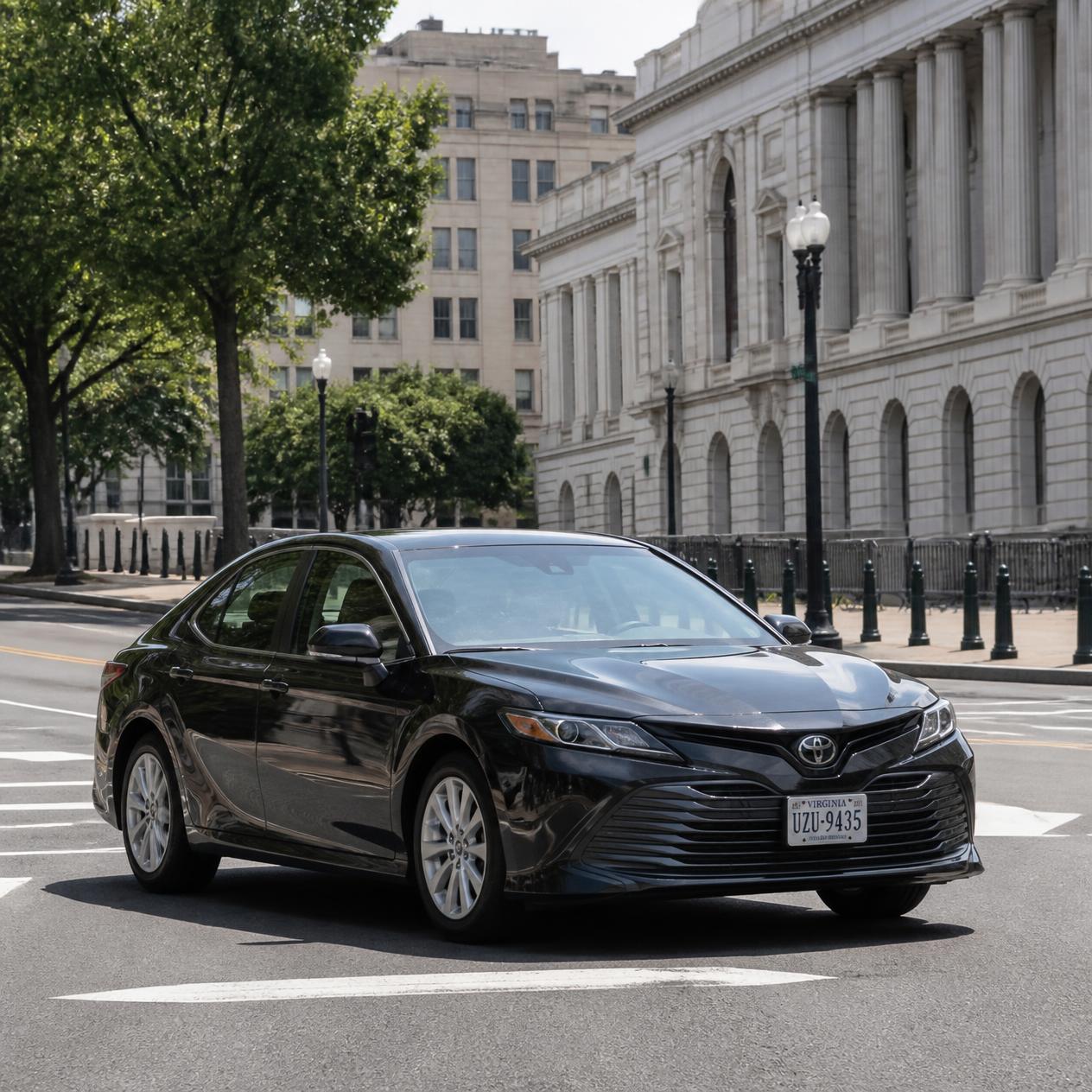
A private car service or Sprinter van covers the same DC-to-Virginia routes — including Alexandria and the broader Northern Virginia corridor — without needing to work around a bus-bridge transfer or a modified train schedule. It's also genuinely useful for the Alexandria-to-Union-Station leg itself: if you're already riding a southern Amtrak route that terminates in Alexandria and would rather skip the connecting bus and Metrorail transfer with your bags, a car covers that last stretch directly.
For groups traveling together during this window — a family, a business team, a wedding party heading to a Virginia venue — one scheduled vehicle also avoids the coordination problem of a group trying to navigate the same bus-bridge transfer separately, each with their own bags and timing.
How to Check Your Train
Because routes are affected so differently — some continuing with a bus connection, others shortened or cancelled — the only reliable way to know your specific trip's status is to check it directly. Amtrak has a dedicated status page for this outage; if you have a reservation for travel during October 16–26 on a route that touches DC-to-Virginia service, confirm your specific train there rather than assuming from general outage news. One nuance worth verifying per-train: at least one route's bus bridge may connect to or from Richmond's Staples Mill Road station rather than Alexandria, so check the details for your exact train.
Book DC to Virginia Transportation During the Amtrak Outage
If your October 16–26 trip involves DC and Virginia, skip the bus-bridge transfer and modified train schedule entirely. Bayside Limousines has served the DC–Virginia corridor for over 33 years — 500,000+ trips, 1,000+ five-star reviews, and a fully owned fleet with W-2 chauffeurs (never a broker) — so you get where you're going on a direct, predictable schedule.
Frequently Asked Questions
Details are drawn from Amtrak's official press release and its dedicated "Pause for Progress" status page, corroborated by WTOP, Time Out, WJLA, WRIC, and other outlets, current as of this writing. Affected schedules and bus-bridge arrangements can be adjusted — always confirm your specific train's status directly on Amtrak's site before you travel during this window.