
DCA Ground Stop If you're searching this because you're stuck at Reagan National right now, here's the short version: check live status first — FAA's airport status page or FlightAware, not a blog post, since conditions change by the minute — then use the decision framework below to figure out whether waiting or driving actually makes more sense for your specific trip.
Where to Check Live DCA Status Right Now
Before anything else: this page can't tell you whether there's a ground stop at DCA at this exact moment, and neither can any other static article — that information changes too fast for a blog post to stay accurate. For real-time status, go directly to the source:
- FAA's National Airspace System Status (fly.faa.gov) — the official source for current ground stops, ground delay programs, and airport-specific advisories.
- FlightAware's DCA airport page — live arrival/departure delay averages and a visual delay map.
- Your airline's app or website — the most accurate source for your specific flight, since airport-wide advisories don't always affect every flight the same way.
Once you know what you're actually dealing with, the rest of this guide helps you decide what to do about it.
- Check live sources first: FAA (fly.faa.gov) and FlightAware — no static page has real-time status.
- A ground stop holds departures to an airport that can't accept arrivals; airborne flights usually continue.
- No fixed timeline: Volume stops often 30–90 min; weather 30 min–3 hr; severe cases 6+ hr.
- Distance drives the decision: A short regional hop favors driving far sooner than a long-haul flight.
- Knowable beats unknowable: For a fixed commitment, a 2-hour drive has a known arrival; a stop does not.
What a Ground Stop Actually Means
A ground stop is an FAA traffic management order that holds departing flights at their origin airport because DCA (or another affected airport) can't safely accept the number of planes trying to land. It's a safety and capacity tool, not a random inconvenience — flights already in the air when the stop is issued usually continue to their destination unless separately redirected. It's departures that get held.
This is different from a Ground Delay Program (GDP), the FAA's tool for longer, more predictable capacity problems — instead of holding all departures, a GDP assigns each flight a specific, individual departure time. A ground stop expected to last a while often gets converted into a GDP once the FAA has a clearer read on the timeline.
Why Ground Stops Happen at DCA
- Weather — thunderstorms, low visibility, high winds; the single most common cause.
- Traffic volume — more planes wanting to land than the airport can safely handle in a given window, common during peak travel periods.
- Equipment or system issues — outages affecting air traffic control systems or airport equipment.
- Staffing — air traffic control staffing shortages at the tower or a regional control center.
- Runway closures — planned or unplanned, especially impactful at DCA given its limited runway configuration.
- Security-related holds — less common, but DCA has occasionally seen stops tied to VIP movements or security requirements, given its proximity to downtown Washington.
How Long Do Ground Stops Usually Last?
There's no fixed timeline, but the pattern across weather and volume events is fairly consistent.
| Cause | Typical Duration |
|---|---|
| Volume-related (peak traffic) | 30–90 minutes |
| Standard weather event | 30 minutes to 3 hours |
| Severe weather at a major hub | Up to 6+ hours |
| Equipment / staffing issues | 🟡 Highly variable — hours in some cases |
The FAA publishes an estimated end time when a ground stop is issued — often 2 to 4 hours out — and reviews it every 15 to 60 minutes. Each stop also carries a low, medium, or high "possibility of extension" rating on the FAA's system, which is a genuinely useful signal. Many ground stops lift before their published end time. Others get extended multiple times. That uncertainty is exactly the problem this guide is built to help with: you can't know in advance which one you're dealing with, so the decision has to account for both.
The Real Question: Wait It Out, or Just Drive?
Once you know a delay is real (not a 20-minute blip) and you don't have solid information on when it'll clear, the actual decision comes down to a few factors.
How far is your destination by car?
This is the single biggest factor. A ground stop affecting a short hop to somewhere like Richmond or Philadelphia changes the math completely compared to one affecting a flight to Chicago or Atlanta.
| Richmond, VA | ~105–114 miles · ~1h50min–2h15min |
| Philadelphia, PA | ~131 miles · ~2h50min |
| New York City, NY | ~225 miles · ~4–4.5 hours |
If your flight is a short regional hop and the ground stop has already run an hour with no clear end in sight, driving can genuinely beat waiting — especially once you add taxi and security time back into a rebooked flight, versus just getting in a car now.
How many people are traveling?
A solo traveler has more flexibility to gamble on a short wait. A family or group weighing a multi-hour uncertain delay against a known 2-hour drive often finds the drive is the lower-stress option once everyone factors in tired kids, missed connections, or a full day already lost to the airport.
What time of day is it, and what's at stake?
A ground stop at 10am with a flexible afternoon meeting is a different problem than one at 6pm before a morning event the next day. If missing a specific window matters — a wedding, a conference start, a cruise departure — err toward the option with a knowable outcome. A 2-hour drive has a knowable arrival time. An uncertain ground stop does not.
Is the ground stop airport-wide or airline-specific?
Check whether the FAA advisory covers all of DCA or whether you're dealing with an airline-specific mechanical or staffing issue described informally as a "delay." Airport-wide ground stops affect everyone equally and tend to resolve together; a single airline's operational problem can mean other carriers are flying normally — which changes whether rebooking on a different airline beats either waiting or driving.
When Waiting Usually Makes More Sense
- The ground stop is clearly weather-related and the system is visibly moving through (check a radar loop, not just the FAA advisory).
- Your destination is far enough that driving isn't realistically faster even accounting for airport delays.
- You have a connecting flight with enough buffer that a 1–2 hour ground stop won't cause you to miss it.
- The FAA advisory notes a "low" possibility of extension.
When Driving Usually Wins
- Your destination is within roughly a 3–4 hour drive and the stop has already run over an hour with no clear resolution.
- You're traveling as a group, where splitting the cost of a car or van makes the per-person cost reasonable against a multi-hour uncertain wait.
- You have a fixed commitment (an event, a connection with no buffer) that a knowable drive time protects better than an unknowable delay.
- The cause is something without a fast resolution pattern — equipment outages and staffing shortages don't clear on a predictable schedule the way a passing storm does.
| Short hop (under ~4 hr drive) + stop already over an hour | Lean toward driving. |
| Long-haul destination, weather visibly clearing | Lean toward waiting. |
| Fixed commitment with no buffer | Choose the knowable outcome — usually the drive. Phone: (410) 451-0000 |
| Cause is equipment/staffing (no fast pattern) | Driving gets safer to choose the longer it drags. |
If You Decide to Drive (or Once You Finally Land)
Once you've made the call to drive instead of wait, or a long delay finally clears and you land hours late, the last thing you want is another layer of uncertainty — hunting for a rideshare at an airport where everyone else delayed on the same wave of flights is doing the exact same thing at once.
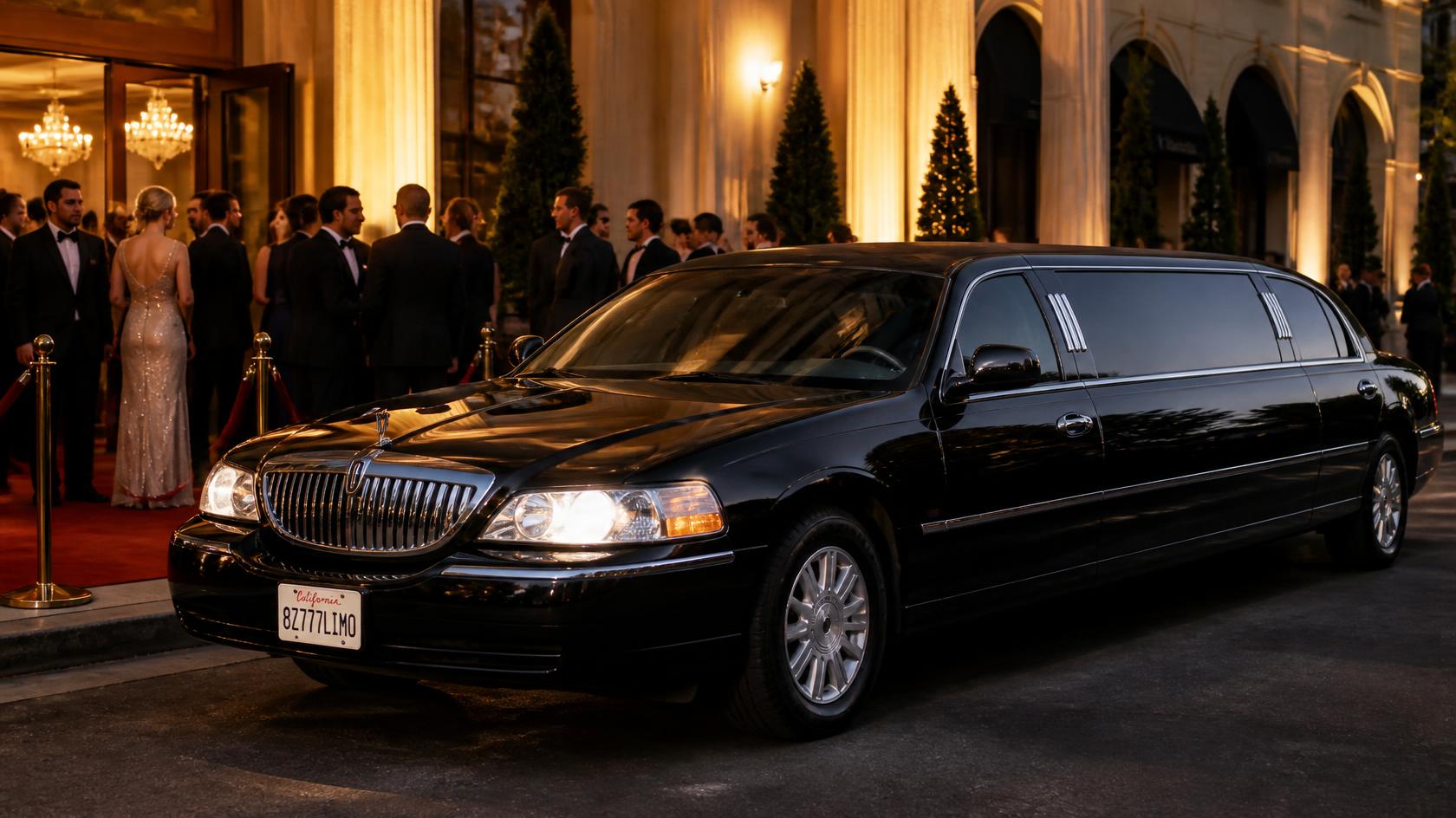
Booking a private car service in advance solves both scenarios: a scheduled pickup waiting for you regardless of how late your flight lands, or a reliable ride for the drive itself if you've decided that's the better call. It's one less variable in a day that's already had too many — the same reason a lot of travelers arrange airport transportation ahead of time rather than leaving the ground leg of the trip to chance.
Book a Ride, Whichever Way You Decide
Whether you're driving instead of waiting out a ground stop, or you finally landed hours late and just want a ride waiting for you, a scheduled private car service takes one uncertainty out of an already unpredictable day. Bayside Limousines has served the DMV for over 33 years — 500,000+ trips, 1,000+ five-star reviews, and a fully owned fleet with W-2 chauffeurs (never a broker), so your pickup shows up as booked. Skip the guesswork on top of the delay.
Frequently Asked Questions
This guide explains how ground stops work and how to decide between waiting and driving — it does not report live status. For current DCA conditions, always check the FAA (fly.faa.gov) and FlightAware. Ground stop mechanics and typical durations are drawn from FAA and aviation-industry sources; drive times are approximate and vary with traffic.