
An employee shuttle service is a recurring, scheduled transportation program — not a one-time bus rental — that moves staff between fixed points and your worksite on a repeating daily or weekly schedule. Companies across DC, Maryland, and Northern Virginia use these programs to solve recruiting, parking, and commute-reliability problems a one-off charter booking was never designed to fix. Here's how the pricing actually works, what it costs, and how to set one up.
- Recurring, not one-off: A shuttle program is a standing contract, priced differently from a single-event charter.
- Contracts beat hourly: Monthly/long-term pricing consistently beats day-rate for the same recurring service.
- Right-size to ridership: Vehicle size tracks daily riders per run, not total company headcount.
- Licensing matters: Any 16+ passenger vehicle needs a driver with a CDL Passenger (P) endorsement.
- It's a cost trade: Weighed against parking expansion, reimbursements, and turnover — not as a standalone expense.
daily route*
bus*
contract savings
CDL P endorsement
*General market benchmarks for sanity-checking a quote — not DC-specific rates. Every program is quoted individually.
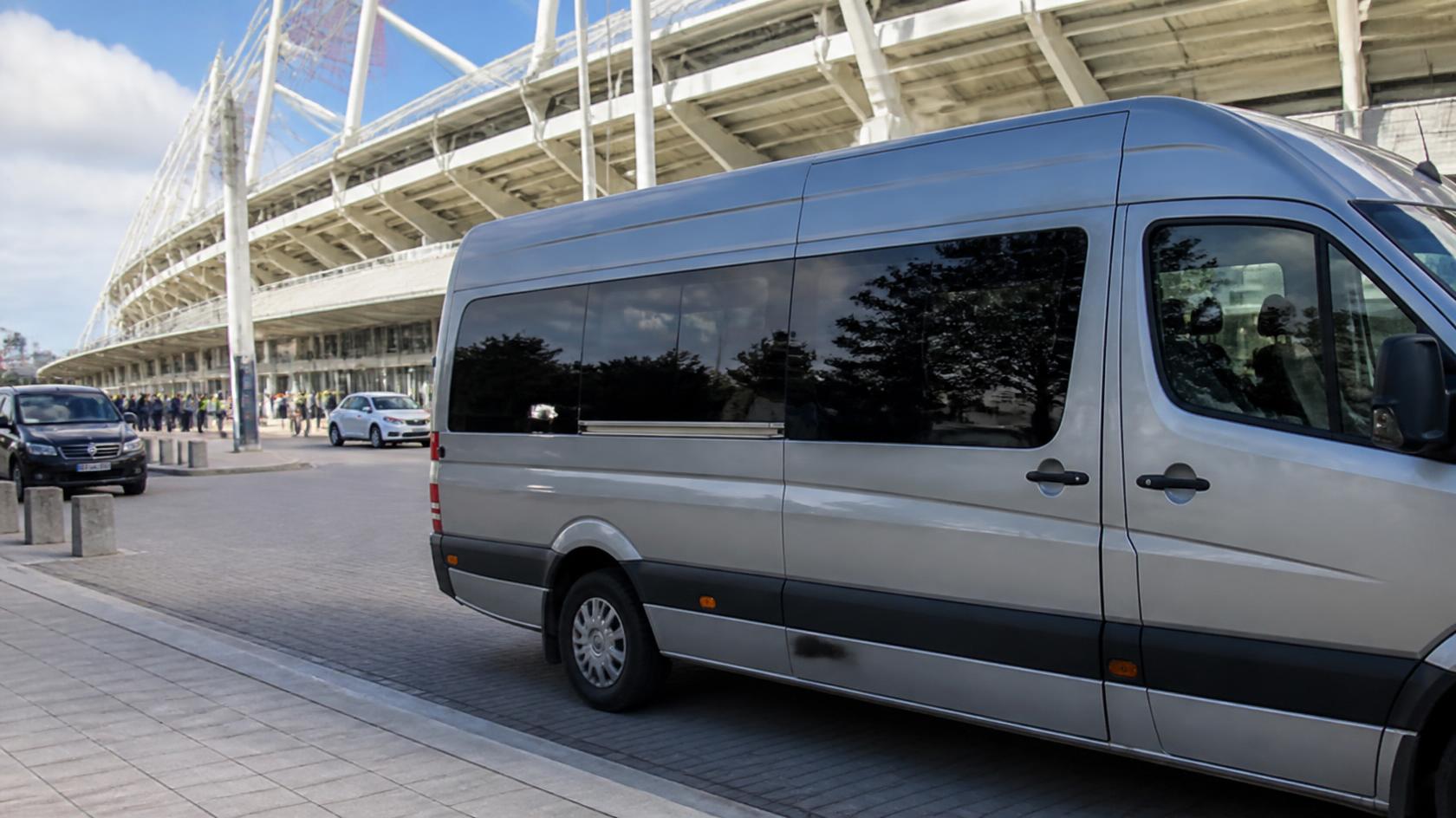
What Is an Employee Shuttle Service?
An employee shuttle service is a contracted, recurring transportation program that runs the same route on a fixed schedule — think a daily loop between a Metro station and a corporate campus, or a shuttle connecting a satellite parking lot to a main office. It's distinct from a corporate shuttle booked for a single event (a conference, an offsite, a client visit), which is quoted as a one-time hourly rental rather than a standing contract.
The core difference that matters for pricing: a one-time corporate shuttle trip is priced like any charter bus rental — by the hour, with a several-hour minimum. A daily or weekly employee shuttle program is priced as an ongoing contract: a day rate, a monthly rate, or a fixed-price agreement covering a defined service level. If you actually need a single trip rather than a recurring program, the charter bus route is the one to look at.
How Does a Corporate Shuttle Program Work?
Most corporate shuttle programs run on one of a few common structures:
- Fixed-price contracts — a predetermined fee for a set duration (monthly or annually) covering a defined service level: a specific number of vehicles, hours, and routes. The most common model for predictable budgeting.
- Hourly/day-rate contracts — billing based on actual hours or days of service, without a long-term commitment. More flexible, but typically more expensive per hour than a locked-in contract.
- Per-ride/per-mile contracts — less common for a dedicated daily shuttle, but sometimes used for supplemental or on-demand service layered on a core program.
Setup typically starts with mapping the actual commute pattern — where employees come from, what times they need to arrive and leave, and how many people move per run — before a provider proposes a route, vehicle size, and schedule. Very large organizations sometimes run shuttles in-house (owning or leasing vehicles), but most companies in the DC/Maryland/Virginia market contract with a specialized corporate transportation provider, which shifts vehicle costs, driver management, and regulatory compliance off the company's own plate.
What Does an Employee Shuttle Cost?
Pricing depends heavily on vehicle size, route length, days per week, and whether you're on an hourly model or a locked-in contract. A few consistent patterns show up across the market — presented here as benchmarks, not DC-specific quotes.
| Pricing Model | What It Typically Looks Like |
|---|---|
| Hourly / day-rate | Full-size bus commonly $150–$250/hr; per-vehicle daily rates in some markets $400–$900/day |
| Monthly contract | Dedicated daily routes commonly $3,000–$9,000+/month by vehicle size, route length, and frequency |
| Contract-length discount | Locking in 6–12 months (or longer) typically prices meaningfully better than month-to-month or hourly |
The consistent pattern across every source in this market: a monthly or long-term contract prices better than paying hourly or daily for the same recurring service. One regional DC/MD/Northern VA provider specifically advertises up to 25% savings on long-term contracts versus hourly rates — which tracks with the broader industry pattern of rewarding commitment with a better rate.
These figures are general market benchmarks rather than a single fixed DC-area price — use them to sanity-check a quote, not as your expected bill. Every program is quoted individually based on your specific route, headcount, and schedule.
Benefits for Employers
- Recruiting and retention — a reliable commute option is a genuine hiring differentiator, especially for roles where commute friction is a known reason candidates decline offers or leave.
- Parking cost avoidance — fewer employees driving individually eases pressure on existing parking and can delay or eliminate the need to expand capacity.
- Predictable budgeting — a fixed monthly contract converts variable, hard-to-forecast costs (parking expansion, reimbursements, turnover) into a known line item.
- Sustainability / ESG — fewer individual cars reduces commute-related emissions, which increasingly shows up in sustainability reporting and can support ESG goals.
- Fewer commute-related no-shows — a scheduled shuttle removes a meaningful amount of commute variability versus everyone driving individually through the same traffic.
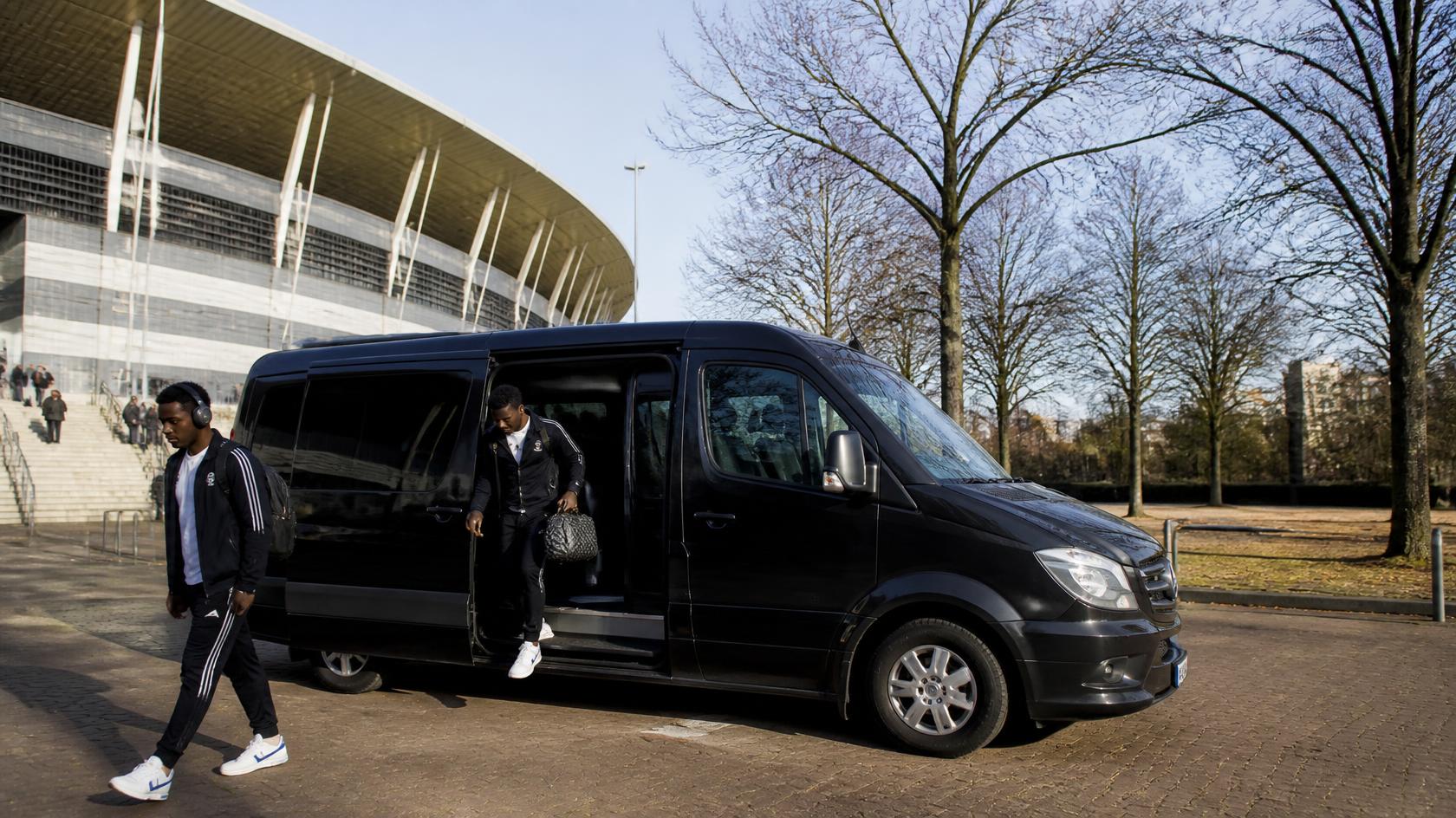
Shuttle Vehicle Options
| Sprinter van — up to ~14 | Small teams, satellite offices, low-frequency routes. |
| Minibus — 20–40 | Mid-size daily routes, department-level shuttles. |
| Full-size motorcoach — 40–56+ | Large campuses, high-ridership routes, consolidated stops. |
Vehicle choice should track your actual daily ridership, not total headcount — a route that moves 15 people at a time doesn't need a 56-seat coach just because the company has 500 employees. Providers can also mix vehicle sizes across the day (a smaller van for an early or late shift, a larger vehicle for peak hours) rather than locking into one size for the whole schedule.
Setting Up Corporate Shuttle Service in DC, MD & VA
-
Map the actual commute pattern first. Where employees come from (a Metro station, a residential cluster, a satellite lot) and the exact pickup/drop-off times.
-
Choose fixed-price vs. hourly. Fixed-price gives predictable budgeting; hourly gives flexibility if ridership or scheduling may change.
-
Right-size to daily ridership. Match the vehicle to riders per run, not total company headcount.
-
Confirm driver licensing. Any vehicle designed for 16+ passengers (including the driver) legally requires a CDL with a Passenger (P) endorsement — a legitimate operator confirms this without hesitation.
-
Ask about contract-length discounts. Locking in 6–12 months or longer typically unlocks meaningfully better pricing than month-to-month.
-
Build in a review point. Ridership shifts as teams grow, hybrid schedules change, or offices move — a route may need adjusting after a few months.
Set Up Employee Shuttle Service in DC, MD & VA
Whether you're moving a small team from a Metro station or running a full daily route for a large campus, the right shuttle program starts with the right route design and vehicle size — not a generic package. Bayside Limousines has served the DMV for over 33 years — 500,000+ trips, 1,000+ five-star reviews, and a fully owned fleet with W-2 chauffeurs (never a broker), which keeps driver management and compliance in-house. Build a program around your actual commute patterns.
Frequently Asked Questions
Dollar figures are general market benchmarks for sanity-checking a quote, not DC-specific contract rates; every program is quoted individually. The CDL Passenger (P) endorsement requirement for 16+ passenger vehicles is confirmed against the FMCSA. Get a specific quote for exact program pricing.